

I can’t remember the last time I read an opinion piece that didn’t include a disclaimer.
*this is simply my own opinion, I understand other people may have a different experience from me, and that’s completely fine. I hope you enjoy the article!
When did we all collectively lose the ability to discern when a post is relevant to us?
Synonymous with the fall of media literacy, there’s an undercurrent of fear, prompted by predecessors who have been called out or cancelled. Suddenly, any form of personal social commentary has to include a preemptive defence case just to make it out of the draft stage.
The other day, someone on Subway Takes said that everyone’s become too sensitive. I disagree, I think everyone’s become too reactive.
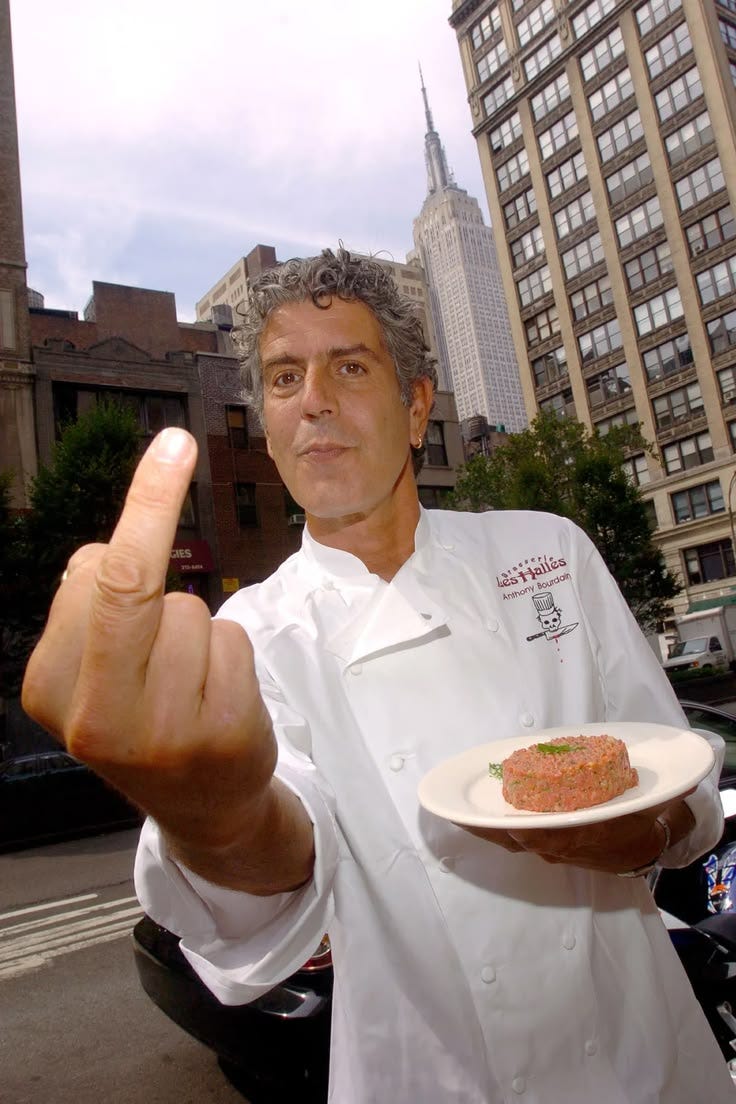
Recently, my partner bought Anthony Bourdain’s book Kitchen Confidential. Partially inspired by our conversations on the life he led, partially by my partner’s own background in cheffing (yes, I am dating a qualified chef (how good)), Bourdain is an undeniable mouthpiece in the art of saying how you feel.
Several chapters in, he asked to read me a quote from the book.
“Even more despised than the Brunch People are the vegetarians. Serious cooks regard these members of the dining public—and their Hezbollah-like splinter faction, the vegans—as enemies of everything that’s good and decent in the human spirit. To live life without veal or chicken stock, fish cheeks, sausages, cheese, or organ meats is treasonous.”
With a semi-penitent glance, he asked, “do you still want to read the book?”
Having been predominantly vegetarian for the past ten years, you’d expect some form of offence from me, insult verging on slight contempt. But it was the opposite; this made me want to read it even more, to understand how his career shaped his personal logic.
Later, Bourdain spoke on his evolution of being wrong and changing his mind, however humbling or embarrassing it may be. He renounced many of the statements published in the book but my point still stands: state your thoughts loudly or not at all.
Regardless, I don’t think our first reaction should be whether we agree with something or not; let it inform your broader worldview. Let us consider that that someone may have had a completely different experience to you (or the same) and arrive at a completely different conclusion.

I get it. It’s easy to shirk the commitment of how you feel when social discourse has disfigured itself into a smooth-surfaced landscape, lacking friction for any real and productive conversations. But as the famous modern proverb goes: if you stand for nothing, you fall for everything.
Currently, the world is divided into two online correspondents: those with opinions stated so ambivalently that there’s no reason to respond, and those that polarise, actualising opinions for clickbait. The first one can be fixed, the second one should be disregarded.
One year ago, I read an article by emily north called the worst person in the world. I remember it because it was honest and unapologetic; a blithe, cynical and lighthearted analysis of the types of people she considers inconsiderate, rude and just generally annoying. The entire article was pure feeling, no opportunity given for someone to say “hey, you’re not allowed to say that!”
I like this. It leaves you with only two choices to agree/disagree or to learn. Good writing is meant to make you feel something, a reflex, a gut reaction for stronger moments, that temporarily uproots your own beliefs and ideas about how something is or should be. I’d rather dislike a piece than remain neutral because the author refused to take a real stance.
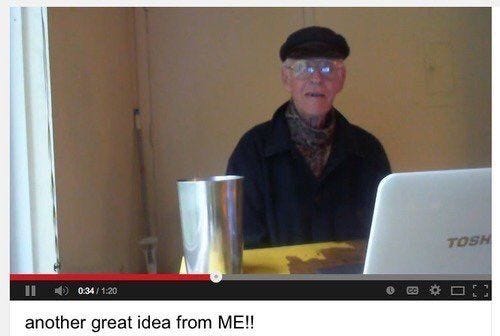
I posted this note on Substack a few months ago. Excited by my circumstances, I took the photo and hit publish without thinking twice.
I woke to (my standard) of fame. It was my first time with this many likes, restacks and comments from strangers and for a brief, dopamine-driven moment, I thought everyone would understand what I was saying in the exact way that I meant it.
Alas, where there’s publicity there’s hostility (“thanks, but I can’t do any of these things.”) And despite the obvious fact that I did not tell anyone what to do I felt I had to defend myself.
Those I responded to, I did with goodwill, to reverse the reactivity and engage in meaningful conversation. Sometimes it worked, other times it didn’t but eventually I realised that being misunderstood is okay; a necessary evil when putting your work on the line. Nuance can exist in opinions but it won’t be discovered through discourse if you immediately lay it all bare.

To finish a thought with “but I don’t know,” is an easy surface defeat that betrays you at a deeper level. Back yourself and if you Bourdain it later (change your mind) the world will not end! You can get up tomorrow and state a new opinion all over again. Flip it, revoke it, rework it until you no longer know what belongs to you and what you’ve taken from the populace. Either way, you won’t know until you say it.
The pre-emptive defence is such a good point. We’ve become very good at imagining every possible objection before anyone has actually made one, and sometimes caveat an opinion until there’s barely anything left to disagree with. I’d much rather dislike what someone genuinely thinks.
exactly!!!! this felt very refreshing to read. since when do we have to agree with everything we consume in media?